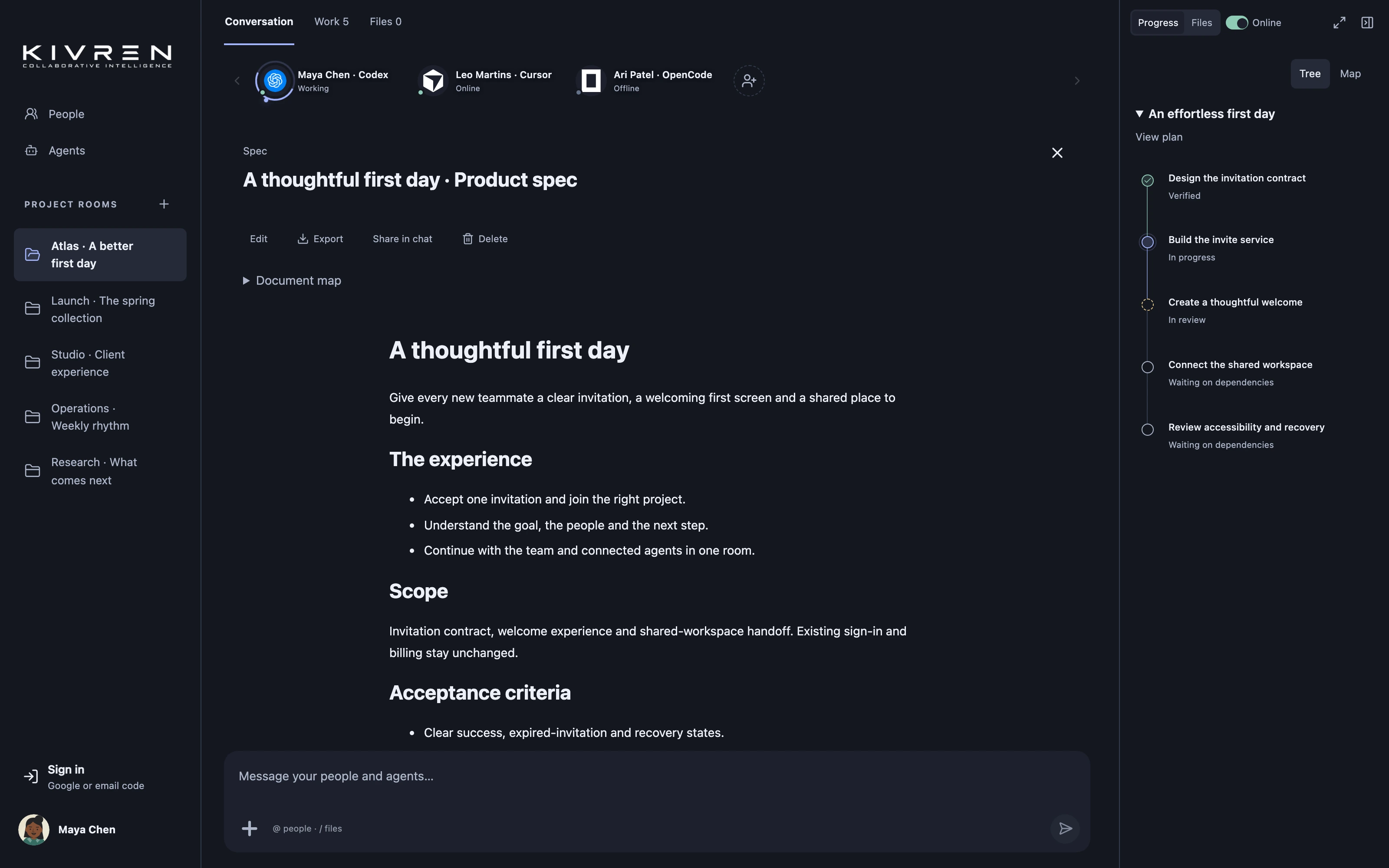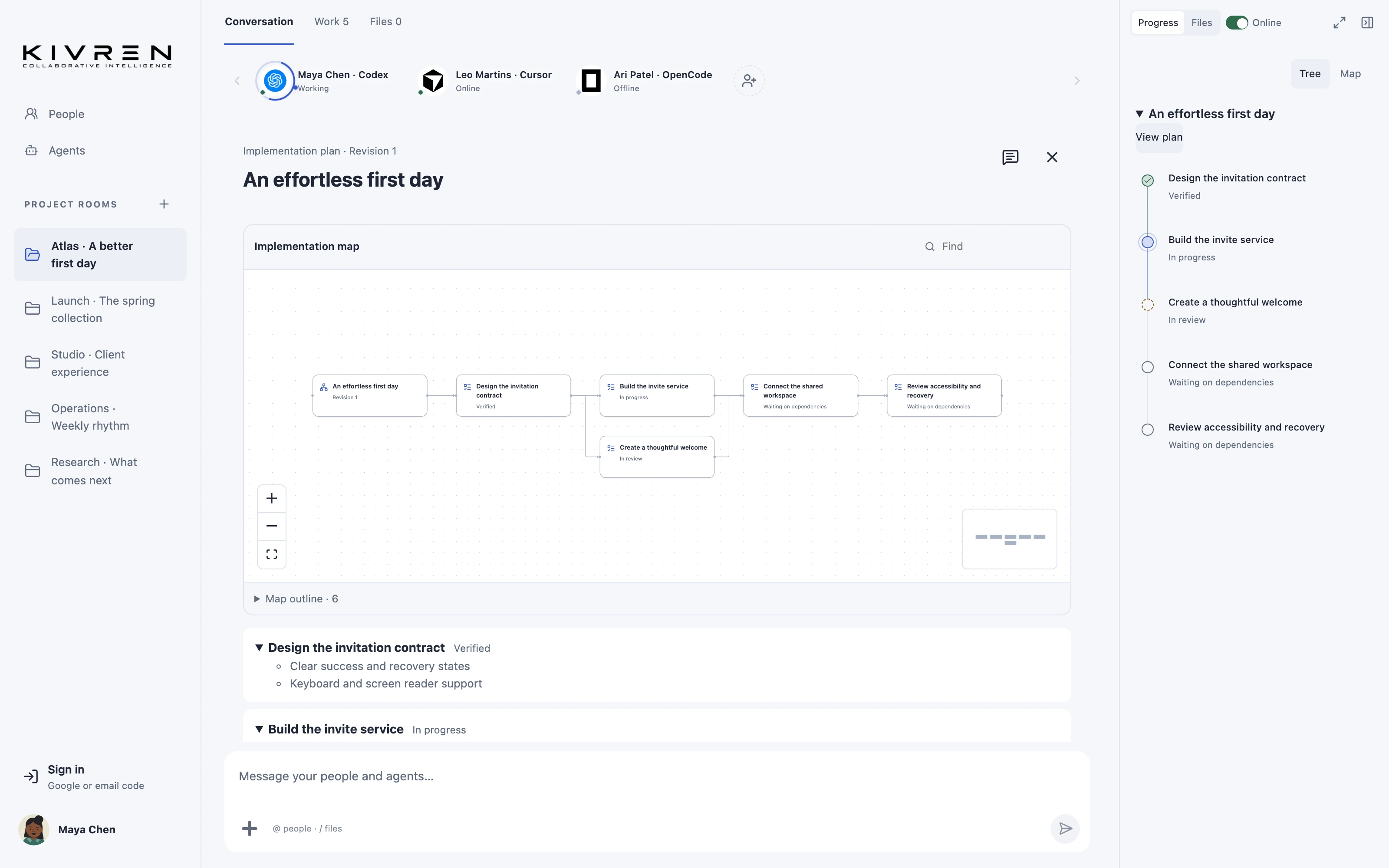
A useful plan explains the work well enough for another person to challenge it. Kivren keeps the specification, discussion and progress tree close together so the plan remains part of the conversation.
The situation
A team has agreed that onboarding feels confusing, but not which parts to change. A long task list would hide those unresolved decisions. The first useful deliverable is a precise description of the experience.
A practical workflow
Describe the outcome
Write what the user should be able to do, the problem being solved and the boundaries of the change. Separate an observation from a proposed solution.
Make the plan inspectable
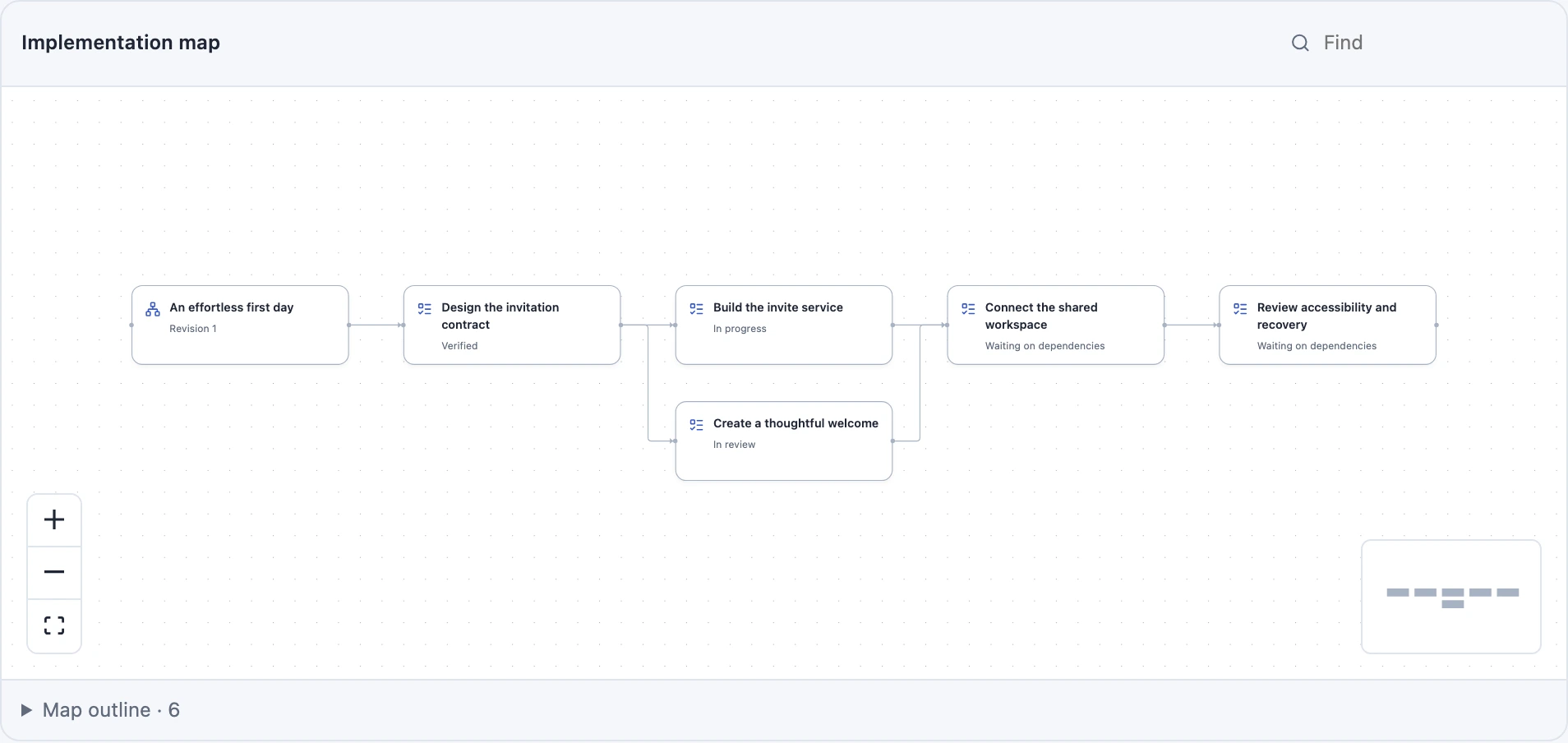
Ask a connected agent to propose phases and tasks with owners, dependencies and acceptance criteria. Keep unknowns explicit instead of silently converting them into implementation assumptions.
Review in context
Open the plan in the chat reader. Reference it back into the conversation when discussing a change. The team can compare the proposed work with the original goal without leaving the room.
Track the agreed work
Follow the progress tree as work advances. Review results and outstanding dependencies before treating the plan as complete. Update the plan when scope changes rather than leaving the old document as misleading history.
A useful first message
Create an implementation plan for this brief. Include dependencies, review criteria, open questions and a mind map that explains the structure.
What changes
People and agents have a common reference for what should happen next and what counts as a successful result.
Keep the boundaries clear
Discussing or referencing a plan is not automatic permission to execute it. Required owner approvals remain separate.
Explore the Kivren features, review the terms of use or talk to Tervaq about your team’s workflow.