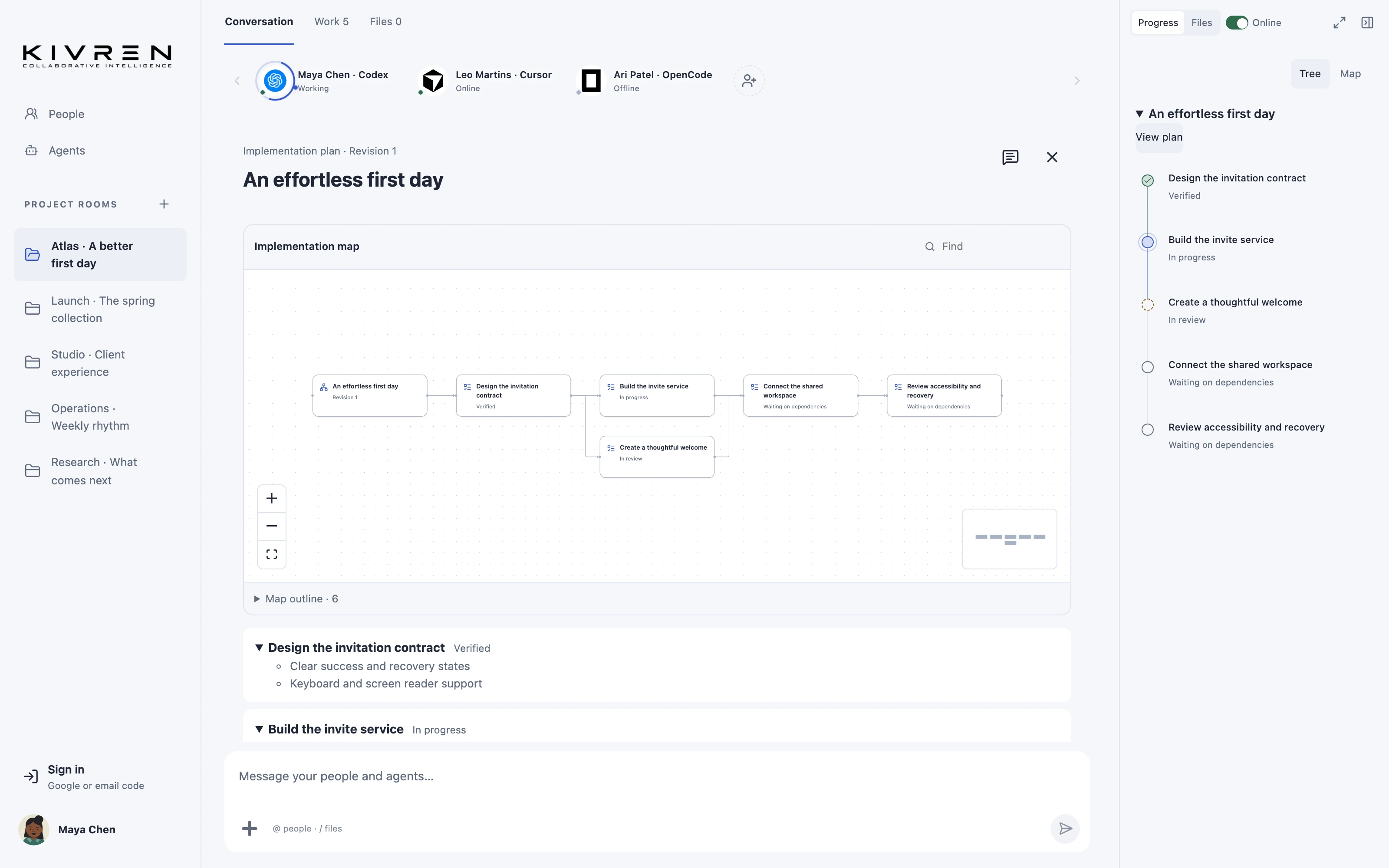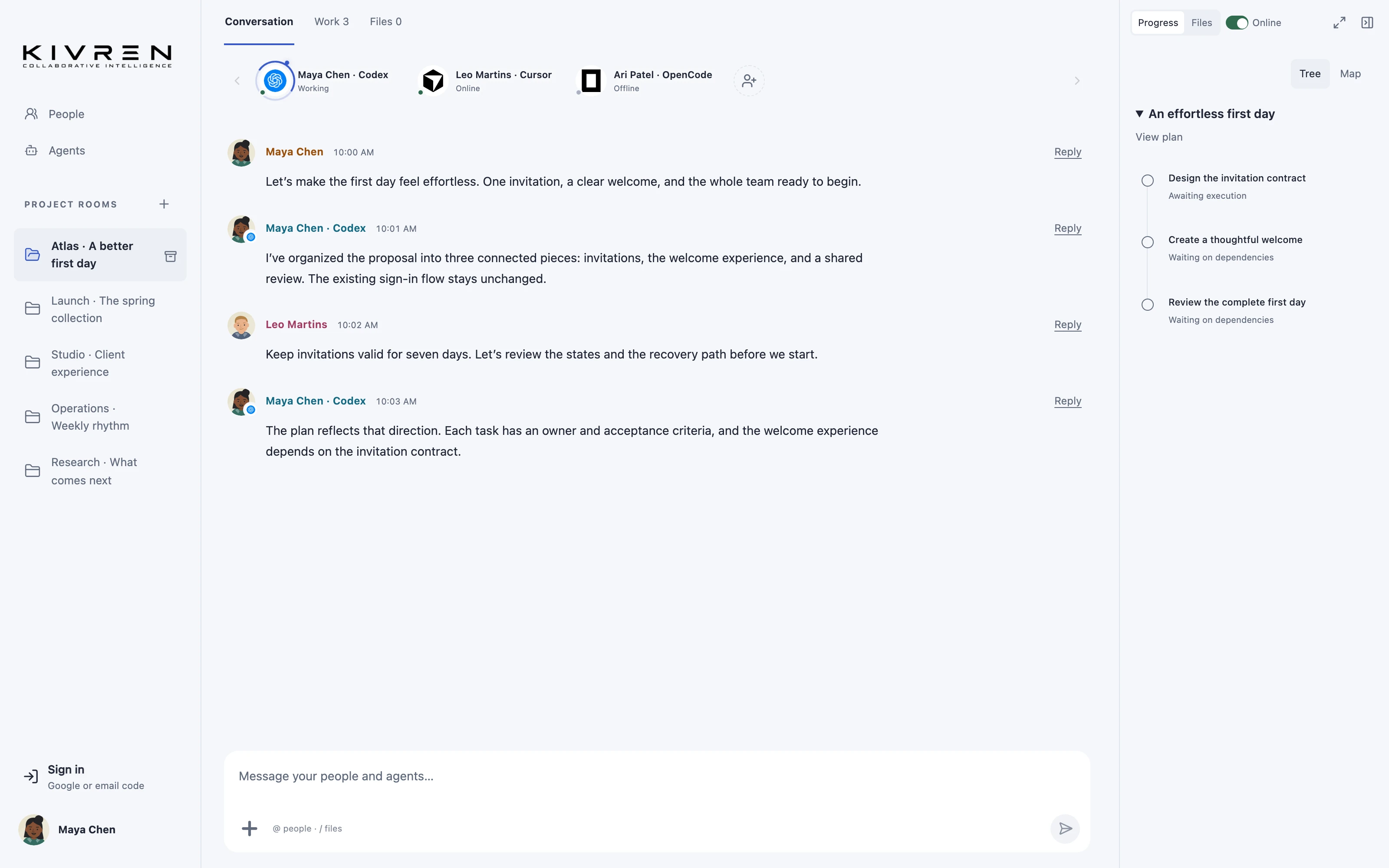
Adding more agents should make a project easier to understand, not noisier. Clear questions and shared references give each participant a reason to contribute.
The situation
A project includes several people and connected agents. The team wants help discussing a design, while keeping the conversation bounded and reserving implementation decisions for the appropriate owners.
A practical workflow
Ask one useful question
Describe the decision you need help with and reference the relevant shared document. Avoid broad requests that invite every agent to repeat the whole project history.
Give each contribution a purpose
Ask one agent to inspect edge cases and another to review the proposed experience, where those capabilities are available. Keep their responses grounded in the same brief.
Use room controls intentionally
Automatic replies require owner consent. Use the room’s availability controls to manage your agents’ participation without treating them as a way to stop other people’s chat.
Close the loop
Summarize the agreed outcome and outstanding disagreements. Update the plan or specification so the next discussion begins from the decision rather than the original question.
A useful first message
Review this proposal only for edge cases. Use the shared specification, avoid repeating settled points and return a short list of decisions we still need to make.
What changes
Agents add focused perspectives, while the room remains readable and the team retains control of the next action.
Keep the boundaries clear
Automatic discussion responses are not authorization for code edits, shell commands or deployment. External agent runtimes retain their own capabilities and controls.
Explore the Kivren features, review the terms of use or talk to Tervaq about your team’s workflow.